How to Get an Individual Tax ID Number (ITIN) in Canada?
An Individual Tax ID Number, commonly called an ITIN, is a US tax identification number issued by the IRS for people who need to file US tax returns but are not eligible for a Social Security Number. Canadians need an ITIN when they have US tax filing obligations from rental income, investment income, business activities, or treaty benefits. You apply for an ITIN by filing Form W7 with your first US tax return along with original identification documents or certified copies. The process takes 8 to 12 weeks and can be done from Canada without traveling to the United States.
What Is an Individual Tax ID Number (ITIN)?
The Individual Taxpayer Identification Number is a nine digit number issued by the Internal Revenue Service for US tax processing purposes.
ITINs follow the same format as Social Insurance Numbers but always begin with the number 9 and have a 7 or 8 in the fourth digit. The IRS created ITINs specifically for people who have US tax obligations but cannot get a Social Security Number because they are not US citizens, not US residents, and not authorized to work in the United States.
Canada does not issue ITINs. The Social Insurance Number serves as the primary tax identifier for Canadian tax purposes. Canadians need an ITIN only when they must file a US tax return with the IRS due to US source income or other US tax obligations. The Canada US Tax Treaty creates situations where Canadians must interact with the US tax system while remaining Canadian residents, which is when an ITIN becomes necessary.
Who in Canada Needs an ITIN?
Several common situations require Canadians to obtain an ITIN for US tax compliance. Canadians who own US rental property need an ITIN to file US tax returns reporting rental income and claiming deductions. The IRS requires non resident property owners to file Form 1040NR annually and elect to be taxed on net rental income rather than gross rent. Electing Under Section 216 handles the Canadian side of rental income reporting while the US return with an ITIN handles the IRS requirement.
Canadians receiving US pension income, royalties, or investment distributions may need an ITIN to claim reduced withholding rates under the Canada US Tax Treaty. The treaty often reduces Part XIII Withholding Tax Canada rates, and an ITIN supports treaty benefit claims. Spouses of US citizens or green card holders who file joint US returns also need ITINs if they are not eligible for Social Security Numbers themselves.
Canadians claiming foreign tax credits or treaty benefits on US returns require ITINs to process those claims through the IRS system. T2209 Foreign Tax Credit on the Canadian side often coordinates with US tax obligations that require an ITIN.
How to Get an Individual Tax ID Number: Application Process
The ITIN application process requires specific documents and forms submitted together with your US tax return.
Step 1: Complete IRS Form W7
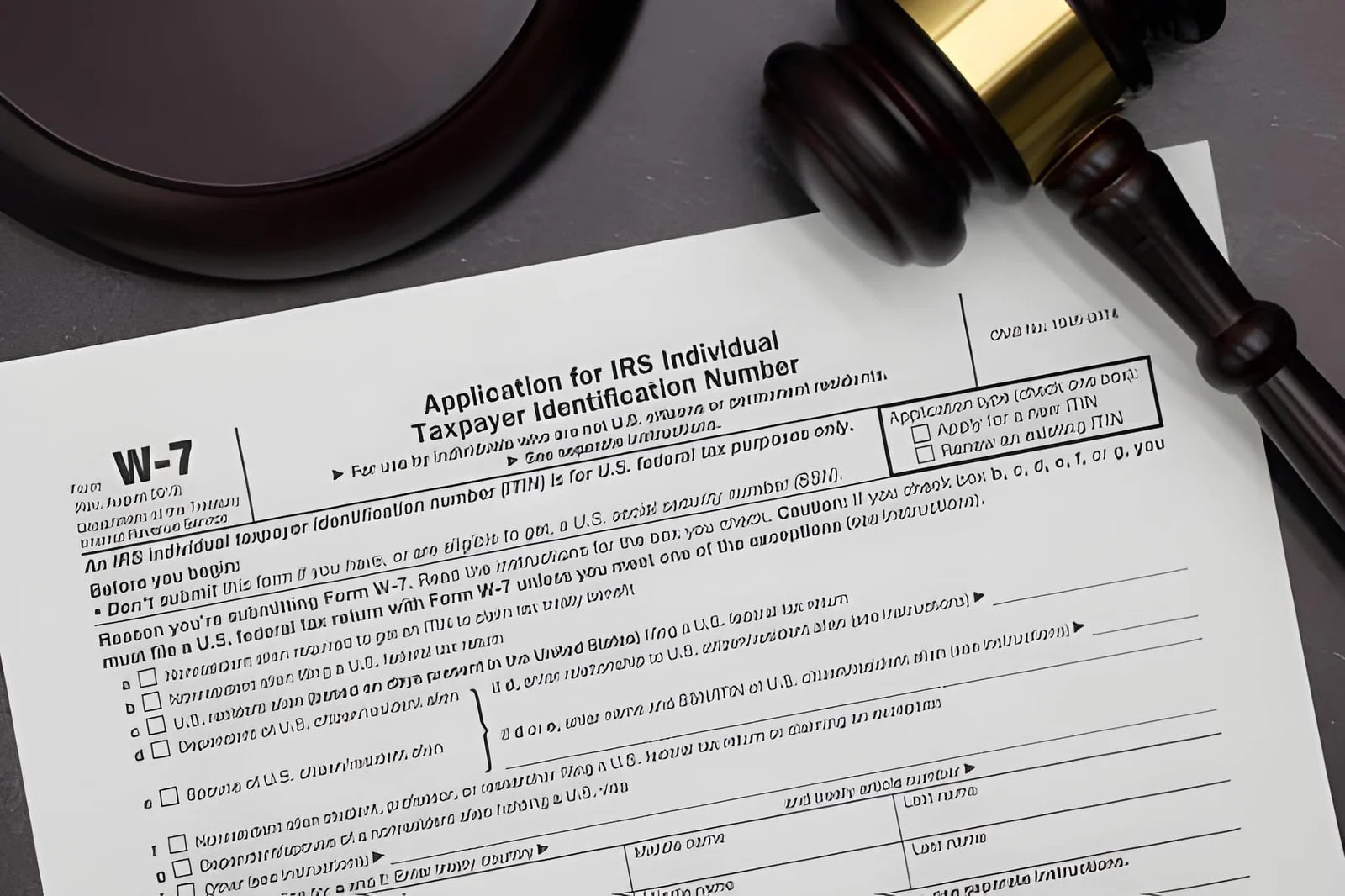
Form W7 is the official ITIN application form that collects your identification details and explains why you need an ITIN.
Download Form W7, Application for IRS Individual Taxpayer Identification Number, from irs.gov. Complete all required sections including your name exactly as it appears on your passport, your date of birth, your Canadian address, and your reason for needing an ITIN. Section titled “Reason You Are Submitting Form W7” lists specific categories. Most Canadians check the box for non resident alien filing a US tax return.
Step 2: Gather Required Identification Documents
The IRS requires original documents or certified copies to prove your identity and foreign status. The IRS accepts 13 types of documents for ITIN applications. Canadians typically use a valid passport, which is the only standalone document the IRS accepts. If you cannot submit your passport, you need at least two documents from the approved list including a national identification card, birth certificate, driver license, or other government issued photo ID.
Photocopies are not acceptable. You must send original documents or certified copies from the issuing agency. Many Canadians hesitate to mail their only passport to the IRS, which is why Acceptance Agents exist as an alternative submission method.
Step 3: Prepare Your US Tax Return
The IRS does not issue ITINs without an accompanying tax return unless you qualify for one of the treaty benefit exceptions. Most Canadians apply for an ITIN while filing Form 1040NR for rental income, investment income, or other US source income. Complete the return and write “APPLIED FOR” in any field asking for your SSN or ITIN.
Canadians filing Personal Tax Returns in Toronto or other Canadian cities while also managing US obligations must coordinate both returns to ensure income is reported consistently and foreign tax credits apply correctly under the Canada US Tax Treaty.
Step 4: Submit Form W7, Documents, and Tax Return Together
All three components must reach the IRS or an authorized Acceptance Agent at the same time. Mail your completed Form W7, original identification documents or certified copies, and your US tax return to the address listed in the Form W7 instructions.
Different addresses apply depending on whether you use an Acceptance Agent or mail directly to the IRS. Standard processing takes 8 to 12 weeks. The IRS processes your ITIN application, assigns your number, processes your tax return, and returns your original documents separately.
Step 5: Use a Certifying Acceptance Agent to Avoid Mailing Original Documents
Acceptance Agents verify your documents in person and submit certified copies so you keep your originals. The IRS authorizes Certifying Acceptance Agents to review original documents, certify copies, and submit Form W7 on your behalf.
This allows you to keep your passport and other original documents instead of mailing them. Acceptance Agents charge fees for this service, typically $50 to $200 USD depending on the agent and complexity.
ITIN vs Social Insurance Number for Canadians
Canadians must understand the difference between Canadian tax identifiers and US tax identifiers to avoid filing mistakes.
| Feature | ITIN | Social Insurance Number |
|---|---|---|
| Issued By | IRS (United States) | Service Canada |
| Used For | US tax returns only | Canadian tax returns and government programs |
| Who Needs It | Canadians with US tax obligations | All Canadian residents and workers |
| Format | 9XX-XX-XXXX | XXX-XXX-XXX |
| Work Authorization | Does not grant US work authorization | Required for legal work in Canada |
| Expiration | Expires if not used on a US return for 3 consecutive years | Does not expire |
Your Social Insurance Number identifies you on Canadian T1 returns, T2209 Foreign Tax Credit forms, and all CRA correspondence. Your ITIN identifies you only on IRS filings and has no Canadian tax system use. RRSP US Tax Reporting and TFSA for US Citizens in Canada both require proper use of the correct identifier for the correct country’s return.
Common ITIN Application Mistakes to Avoid
The most common mistake is submitting photocopies instead of originals or certified copies. The IRS rejects applications with photocopied documents and returns them without processing, which restarts the entire timeline. Another frequent error is submitting Form W7 without an attached tax return when the applicant does not qualify for an exception. The IRS rejects these applications unless you specifically qualify for treaty benefit exceptions.
Name mismatches between Form W7 and supporting documents also cause rejections. Your name on Form W7 must match your passport or identification documents exactly, including all middle names. Using a shortened name or nickname creates a mismatch the IRS cannot process.
Renewing an Expired ITIN
ITINs expire automatically if they are not used on a US tax return for three consecutive years. The IRS began expiring unused ITINs in 2016. If your ITIN expired, you must renew it before filing your next US return using the same Form W7 process. The renewal requirements are identical to the original application. Submit Form W7 marked as a renewal along with original documents or certified copies and your current year US tax return.
Canadians who previously filed US returns but stopped for several years often discover their ITIN expired when they need to file again. Deemed Disposition Canada rules or Departure Tax in Calgary can create final US filing obligations that require a valid ITIN even after years without US tax activity.
Conclusion
Getting an individual tax ID number from Canada requires careful preparation, proper documentation, and patience through the 8 to 12 week processing period. The ITIN exists specifically for Canadians and other non residents who must file US tax returns without qualifying for Social Security Numbers. Whether you own US rental property, receive US income, or claim treaty benefits, the ITIN application process follows the same steps: complete Form W7, gather original documents or certified copies, attach your US tax return, and submit everything together to the IRS or through a Certifying Acceptance Agent.
Tax Return Filers PC helps Canadians navigate ITIN applications, dual country tax filing, and cross border compliance for individuals with tax obligations in both Canada and the United States.
FAQs
Book a Free Meeting with Our Tax Experts
Take the first step toward better tax planning with a free consultation. Our team is ready to review your situation and provide clear guidance. Book a time slot directly on our calendar and we will connect with you shortly.