CRA Tax Instalments: Who Pays and What If You Skip
CRA tax instalments are quarterly tax payments the Canada Revenue Agency requires from individuals and businesses who owe more than $3,000 in net tax for the current year or either of the two prior years. The CRA sends instalment reminders in February and August each year, but the responsibility to pay on time falls on you. Instalments cover income tax, CPP contributions, and any other amounts that are not deducted at source.
If you skip or underpay your instalments, the CRA charges instalment interest that compounds daily, plus a possible penalty if the interest exceeds $1,000 for the year.
Who Has to Pay CRA Tax Instalments?
If you are an employee with a single T4 job where your employer deducts income tax, CPP, and EI from every paycheque, you likely owe little or nothing at filing time. The CRA does not require instalments from you. But if you earn self-employment income, rental income, investment income, capital gains, or any combination that produces a tax bill above $3,000, the CRA expects you to pay quarterly throughout the year instead of waiting until April 30.
The $3,000 threshold applies at both the federal and provincial level combined. For Quebec residents, the threshold is $1,800 because Revenu Québec collects provincial tax separately. The CRA uses your net tax owing from the current year and the two previous years to determine if you must pay. If your net tax exceeded $3,000 in either of the two prior years, the CRA sends you an instalment reminder even if you expect to owe less this year.
Common situations that trigger CRA tax instalments include freelancers and sole proprietors reporting business income on Form T2125, landlords with rental income on Form T776, retirees receiving pension or RRSP income with insufficient tax withheld, and investors with large capital gains or dividend income. For those deciding between business structures, our guide on salary vs dividends in Canada explains how each option affects instalment obligations.
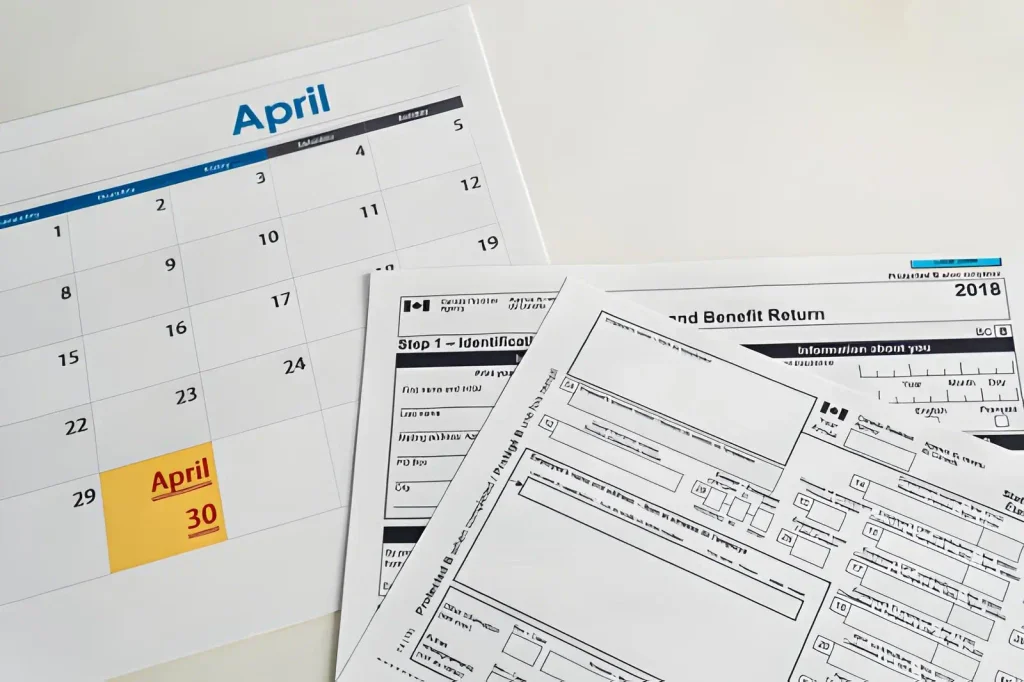
When CRA Tax Instalments Are Due?
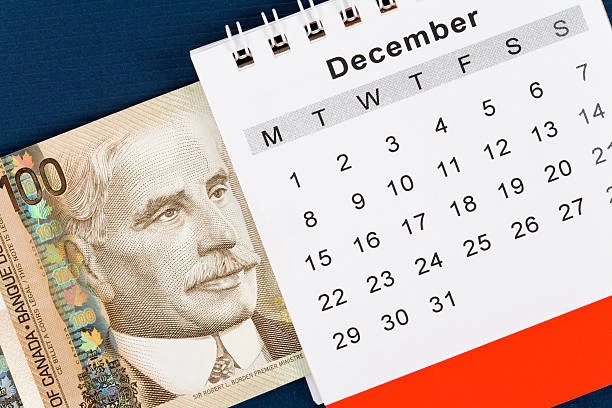
The CRA sets four quarterly deadlines each year, and missing any one of them triggers instalment interest from that due date.
| Instalment Period | Due Date |
|---|---|
| January to March | March 15 |
| April to June | June 15 |
| July to September | September 15 |
| October to December | December 15 |
Each payment covers roughly one quarter of your estimated annual tax. The CRA mails instalment reminders in February (for March and June) and in August (for September and December). The reminders include suggested payment amounts based on your prior year returns. You do not need to wait for the reminder. If you know you owe instalments, pay by the due date regardless.
Corporations follow a different schedule. Most Canadian-controlled private corporations (CCPCs) pay monthly instalments, due on the last day of each month. Small CCPCs that owe less than $3,000 in total tax for the year can pay quarterly instead. Corporate instalment rules apply to your corporate tax filing in Toronto, Mississauga, Brampton, Calgary, and every other Canadian jurisdiction.
Three Methods to Calculate Your CRA Tax Instalments
The CRA offers three calculation methods, and you can choose the one that results in the lowest payments without triggering interest.
- The no-calculation option uses the amounts the CRA prints on your instalment reminder. The CRA bases these on your prior year tax, splitting it into four equal payments. This is the simplest method and guarantees no instalment interest, but it can result in overpayment if your income dropped this year.
- The prior-year method calculates each payment as one quarter of your total tax owing from the previous year. This produces the same result as the CRA reminder amounts in most cases. If your income is stable year to year, this method works well and requires no estimation.
- The current-year method estimates your tax for the current year and divides it into four payments. This method produces the lowest instalments when your income has decreased, but it carries risk. If you underestimate your income and pay too little, the CRA charges instalment interest on the shortfall from each due date. You need accurate records and a reliable income forecast to use this method safely.
What Happens If You Skip or Underpay Instalments?
Instalment interest compounds daily at the CRA prescribed rate, which the CRA updates every quarter. For 2024, the prescribed rate on overdue amounts is 10 percent per year. The CRA calculates interest separately for each instalment period. If you paid your March and June instalments on time but missed September, the interest runs only on the September shortfall from September 15 until you pay or file your return.
If your total instalment interest for the year exceeds $1,000, the CRA adds a penalty on top. The penalty equals 50 percent of the instalment interest that exceeds the greater of $1,000 or 25 percent of the interest you would have owed with zero payments. This structure means the CRA targets large shortfalls, not minor rounding differences.
The CRA does not send a separate bill for instalment interest. It appears on your Notice of Assessment after you file your T1 return. Many taxpayers do not realize they owe instalment interest until they see the charge on their NOA. Late instalment interest is one of the most avoidable costs on your personal income tax returns in Toronto, Mississauga, Brampton, and Calgary.
Common Mistakes with CRA Tax Instalments
Most errors come from not knowing the rules exist, underestimating income, or confusing the instalment schedule with the filing deadline.
- Not paying instalments at all. Many self-employed Canadians and landlords do not realize the CRA expects quarterly payments. They pay the full amount at filing time and get hit with instalment interest on their Notice of Assessment.
- Confusing the filing deadline with the instalment deadline. Self-employed individuals have until June 15 to file their T1 return, but their tax owing is still due April 30. Instalment deadlines are separate from both dates and fall on March 15, June 15, September 15, and December 15.
- Using the current-year method with inaccurate estimates. If you underestimate your income, the CRA charges interest on the difference between what you paid and what you should have paid. Use this method only when you have reliable income tracking and organized books.
- Ignoring the CRA instalment reminder. The reminder is not a suggestion. If the CRA sends you one, it means your prior returns show net tax above $3,000. Pay the suggested amounts to avoid any instalment interest.
Tax Return Filers PC helps self-employed individuals, landlords, and investors across Toronto, Mississauga, Brampton, and Calgary calculate and manage CRA tax instalments as part of their personal income tax returns in Calgary and corporate tax filing in Mississauga, with quarterly tracking to avoid interest charges and penalties.
FAQs
Book a Free Meeting with Our Tax Experts
Take the first step toward better tax planning with a free consultation. Our team is ready to review your situation and provide clear guidance. Book a time slot directly on our calendar and we will connect with you shortly.