GST, HST and PST in Canada: A Complete Guide
Canada operates under three sales tax systems: GST, HST, and PST, and every business in the country must understand how these taxes work. Whether you sell goods, offer services, or run an online store, the tax rules that apply to you depend on where your business is registered and where your customers are. This guide breaks down everything you need to know about GST, HST, and PST in Canada, from registration to filing to credits.
What Is GST, HST, and PST in Canada?
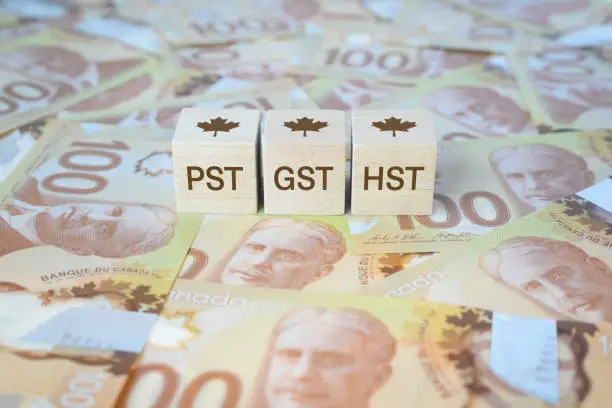
Canada does not have a single national sales tax. Instead, it uses a system where federal and provincial taxes work side by side and sometimes together.
GST (Goods and Services Tax): GST is a federal tax of 5% applied to most goods and services sold in Canada. It applies in every province and territory.

HST (Harmonized Sales Tax): HST is a combined tax that merges the federal GST with a provincial sales tax into one single rate. Provinces that use HST have agreed to combine both taxes to simplify collection and filing.

PST (Provincial Sales Tax): PST is a separate provincial tax applied on top of GST. Provinces that use PST collect it independently, which means businesses must register and file separately for both taxes.

Which Provinces Use GST, HST, or PST?
Here is a clear breakdown of which tax system applies in each province or territory:
| Province / Territory | Tax Type | Total Rate |
|---|---|---|
| Ontario | HST | 13% |
| British Columbia | GST + PST | 5% + 7% = 12% |
| Saskatchewan | GST + PST | 5% + 6% = 11% |
| Manitoba | GST + PST | 5% + 7% = 12% |
| Quebec | GST + QST | 5% + 9.975% = ~15% |
| Alberta | GST only | 5% |
Alberta stands out as the only province with no provincial sales tax, making it one of the most tax-friendly provinces for businesses. Each province uses a different sales tax system. Understanding GST vs HST vs PST can help you make strategic business decisions, especially if you’re considering where to incorporate.
Who Needs to Collect GST, HST, and PST?
Not every business in Canada is required to collect and remit sales tax right away. The Canada Revenue Agency (CRA) uses a revenue threshold to determine when registration becomes mandatory. If your business earns more than $30,000 in taxable revenues in a single calendar quarter or over four consecutive quarters, you must register for GST/HST in Canada. This threshold applies to most small businesses, freelancers, contractors, and self-employed individuals. Once you cross this threshold, you are legally required to register within 29 days.
Some businesses are exempt from GST/HST registration regardless of revenue. These include certain financial services, medical and dental services, and residential rental income. If you are unsure whether your business qualifies as exempt, it is always best to consult a tax professional.
For PST in provinces like BC and Saskatchewan, the rules are different. PST registration is required if you sell taxable goods or certain services in those provinces, regardless of your revenue level. BC businesses must register for PST separately from GST, even if they are already GST-registered.
How GST, HST, and PST Work Across Provinces
Ontario — Understanding HST
Ontario uses the Harmonized Sales Tax at a rate of 13% (5% federal + 8% provincial). When a business in Ontario makes a taxable sale, it collects 13% HST from the customer and then remits this to the CRA. Businesses registered for HST can claim Input Tax Credits to recover HST paid on eligible business expenses.
One area where HST rules can get confusing in Ontario is real estate. HST generally applies to newly constructed homes but not to resale homes, though exceptions exist, such as when a property has been substantially renovated. This distinction is especially important for businesses and investors in Toronto and Mississauga, where both new construction and resale markets are highly active.
Alberta — The GST-Only Advantage
Alberta is unique in Canada because it has no provincial sales tax. Businesses in Alberta only deal with the 5% federal GST. This simplicity is one reason Calgary continues to attract new businesses and entrepreneurs.
There is no PST registration, no PST returns, and no need to track two separate tax rates. Alberta businesses register for GST with the CRA, file their GST returns on schedule, and that is essentially it. For businesses that operate across provinces, keeping their base in Alberta can significantly reduce tax administration complexity. If you’re operating in Calgary, learn more about GST registration and filing for Alberta-based businesses.
British Columbia — Navigating the Dual Tax System
BC operates a dual tax system where GST and PST are completely separate. Businesses must register for GST with the CRA and for PST with the BC Ministry of Finance independently. Each tax has its own return, its own deadlines, and its own rules about what is taxable.
BC’s PST rate is 7%, applied to most tangible goods and some services. One important development in 2026 is BC’s decision to expand PST coverage to include certain professional services. This change affects accountants, consultants, and other service-based businesses operating in BC. BC business owners must register for both GST and PST separately. Learn the complete process in our guide on how to register for PST in BC.
GST/HST Filing and Payment Deadlines
Once registered, businesses must file their GST/HST returns on a regular schedule. The CRA assigns one of three filing frequencies based on annual revenue:
- Annual filing for businesses with less than $1.5 million in taxable sales
Deadline: Within 3 months after your fiscal year-end - Quarterly filing for businesses between $1.5 million and $6 million in taxable sales
Deadline: One month after the end of each quarter - Monthly filing for businesses with more than $6 million in taxable sales
Deadline: One month after the end of each month
Example deadlines for calendar-year businesses:
| Filing Period | Return Due Date |
|---|---|
| January 2026 (monthly) | February 28, 2026 |
| Q1 2026 (quarterly) | April 30, 2026 |
| Year-end 2026 (annual) | March 31, 2027 |
For the 2026 tax year, businesses should pay close attention to their filing deadlines, especially if they changed filing frequency or experienced significant revenue changes. We’ve prepared a full breakdown of HST/GST Filing Deadlines to help you plan ahead.
GST/HST Credit for Individuals
The GST/HST tax system is not just a business concern. The Canadian government offers a GST/HST credit to help low- and modest-income individuals and families offset the cost of sales taxes they pay throughout the year. This credit is tax-free and paid quarterly by the CRA. You do not need to apply separately, eligibility is determined automatically when you file your annual income tax return. Eligibility is based on your household income, marital status, and number of dependent children.
For the 2025-2026 benefit year, single individuals with low income may receive up to several hundred dollars annually, while families with children may receive more. The exact amount depends on your net income as reported on your tax return.
Common Mistakes Businesses Make with Sales Tax
Many businesses run into trouble with sales tax compliance, not because they ignore it, but because the rules are genuinely complex. Here are the most common errors to avoid.
- Not registering on time is one of the biggest issues. Some business owners do not realize they have crossed the $30,000 threshold until months later. By then, they owe GST/HST they never collected and the CRA still expects payment.
- Missing Input Tax Credits is another costly mistake. Many businesses leave money on the table by failing to claim ITCs on eligible business expenses. Proper record-keeping is essential to maximize your ITC claims.
- Confusing GST and PST rules trips up many BC and Saskatchewan businesses. Forgetting that PST registration is separate or misclassifying a taxable service as PST-exempt, can lead to audits and penalties.
- Incorrect filing frequency is also common. If your revenue grows significantly, your filing frequency may change. Always confirm your assigned filing period with the CRA to avoid late filings.
Conclusion
Understanding GST, HST and PST in Canada is essential for every business owner, no matter how small or large your operation is. The rules vary significantly from one province to another, and keeping up with filing deadlines, registration requirements, and credit opportunities takes real effort and attention. Whether you are a Calgary entrepreneur benefiting from Alberta’s GST-only system, a Vancouver business owner navigating BC’s dual-tax setup, or an Ontario company managing HST on products and services, staying compliant protects your business from penalties and keeps your finances in order.
If you’re unsure about your sales tax obligations or need professional support, Tax Return Filers is here to help. Our team works with Canadian businesses of all sizes across the country. For example, we have a team in Canada that can help you in HST returns in Toronto, Toronto Corporate Tax Filing, Bookkeeping in Toronto, and Toronto Accounting services to ensure you stay compliant, maximize your input tax credits, and never miss a deadline.
FAQs
Book a Free Meeting with Our Tax Experts
Take the first step toward better tax planning with a free consultation. Our team is ready to review your situation and provide clear guidance. Book a time slot directly on our calendar and we will connect with you shortly.